Compatibility split

2 ghz spectrum analyzer briefs start from the stop frequency and the port

LinkScope Sourcing 54 is an independent sourcing partner. A 2 ghz spectrum analyzer line is usable for factory quotes when the brief names the frequency range, the resolution bandwidth steps the buyer actually uses, the 50 ohm impedance, and the connector on the RF input.

A catalog title that stops at 2 GHz can still hide a 9 kHz start, a 100 kHz start, or a tracking-generator option that was never priced. Measurement accuracy on a swept trace depends on the attenuator setting and the reference level. Ask each factory which RBW, such as 10 Hz, 300 Hz, or 1 MHz, the displayed average noise level figure uses, and whether a preamp is in that path.

Request Factory Quotes
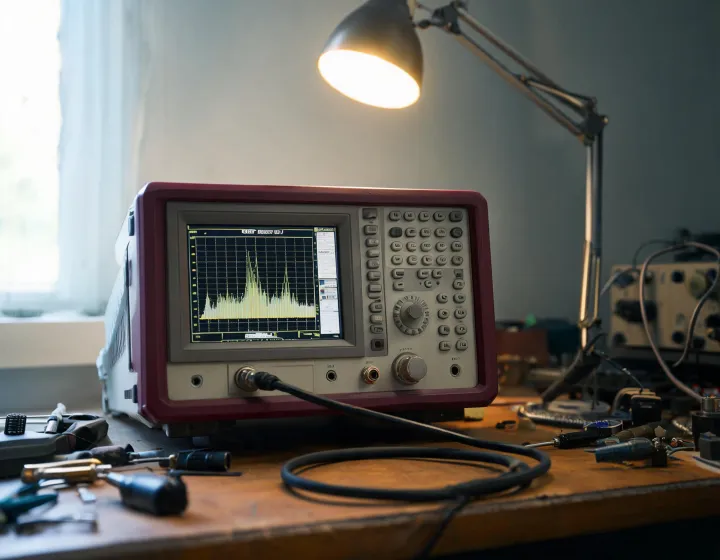
Unbranded spectrum analyzer on a telecom bench beside a coaxial lead
  • Interface: N-type, BNC, or SMA on the RF input?
  • Reach: start frequency and a hard 2 GHz stop.
  • Power: mains voltage and internal battery if the unit leaves the bench.
  • Host signal: 50 ohm source, or a 75 ohm plant that needs a pad?
  • Evidence: datasheet revision and calibration certificate date.

Quote scope that keeps a 2 GHz row comparable

Span and RBW

Record center frequency, span, and the RBW the lab uses for occupied-bandwidth checks. A 1 Hz RBW and a 1 MHz RBW are different sweep times and different noise floors. Leave the sweep-point count, such as 401 or 1001, as an open cell if the offer is silent.

Level path

Write the internal attenuator range, often 0 dB to 50 dB in 10 dB steps, and whether a preamp is quoted. Preamp gain changes receiver sensitivity. It also changes the input level that compresses the front end. Ask for the 1 dB compression point at the quoted attenuator setting.

Delivered carton

Separate the analyzer, the power cord, the calibration kit if any, software licenses, and a connector saver. Incoterm, currency, freight, and duties sit on their own lines. A meter-only EXW figure is not the same total as a DDP figure that includes a 12-month calibration certificate.

What stays excluded

If the sheet does not name a tracking generator, mark it excluded. If return loss or VSWR of the input port is missing, ask for the port specification at 1 GHz and at 2 GHz rather than copying a family brochure. Calibration traceability means a lab name and a date tied to the serial, not a slogan on the carton.

A procurement scenario, not a published saving: a US carrier lab comparing two benches for a 2 GHz cellular spur check wrote 9 kHz to 2 GHz, 50 ohm, and N-type into the sheet. One offer priced a unit whose tracking generator stopped at 1.5 GHz. After the datasheets were lined up, the second offer was the row that stated a 2 GHz tracking generator and a certificate dated within 12 months of shipment. The desk did not pick a winner. It stopped the buyer from subtracting the two headline numbers.

Who agrees before the analyzer RFQ leaves the building

Procurement manager

Owns quantity, the US destination, currency, and whether a target budget is per unit or for the whole order. A budget is a buyer ceiling. It is not a price this desk has verified against a market index.

RF engineer

Owns the frequency range, the impedance, and the signals that will hit the port. Measurement accuracy is their call when the datasheet quotes amplitude error at a stated attenuator and a stated frequency.

Bench technician

Owns connector mating cycle wear, torque on the N-type nut, and whether a 2.92 mm adapter is already in the drawer. Ingress protection is rarely the deciding code on a bench analyzer. Rack unit height matters if the unit must sit in a 19 inch bay.

Quality reviewer

Owns calibration traceability: the lab, the interval, and whether the certificate lists the same frequency range the quotation sells. A sticker that says calibrated is not the certificate.

Evidence questions that change whether two offers match

Which document states the displayed average noise level?

Ask for the page that names RBW, attenuation, and whether the preamp is on. A figure such as -140 dBm at 1 GHz in a 10 Hz RBW is a cell to confirm on the exact model. It is not a rating this site assigns.

Is the amplitude specification percent, decibels, or both?

Some sheets say plus or minus 0.5 dB from 9 kHz to 2 GHz after a stated warm-up. Others add a frequency-response term. Write the warm-up minutes and the temperature window the supplier used.

Does the quotation include the current FCC or safety file when the destination requires it?

Applicability depends on the exact model and how it is marketed. Request the authorization evidence if the buyer legal team says it applies. This desk does not certify the instrument.

New analyzer or refurbished?

New stock usually starts a clearer warranty and a calibration interval near shipment. A refurbished analyzer can cover a discontinued 2 GHz frame when the seller names replaced assemblies, remaining options, and the support route. Neither path is assumed on this page.

Read the 26 GHz inquiry cards when the stop frequency may move past 2 GHz, or open the procurement brief for the same evidence columns in article form.

Send the 2 GHz cells for a factory-quote review

Share start frequency, stop frequency, RBW, connector, quantity, destination, and requested timing. Optional budget needs a currency and a per-unit or whole-order basis. A high-end, mid-range, budget, or undecided supplier preference is your stance, not a verified grade.